Context
Antimicrobial resistance (AMR) is one of the most urgent threats to global public health. It compromises the effectiveness of treatments, weakens health systems, and worsens inequalities, particularly in low-resource countries.
In response to this challenge, the Mérieux Foundation and Paris Cité University have designed an intensive one-week course, organized every year at the Les Pensières Center for Global Health, aimed at health professionals, scientists and decision-makers involved in the fight against AMR.
The program is based on the five objectives of the WHO’s Global Action Plan (GAP-AMR) and follows an integrated “One Health” approach.
Objective
Strengthening critical decision-making among stakeholders involved in the fight against AMR by giving them an in-depth understanding of the scientific, political, economic, and operational issues linked to this global problem.
Activities
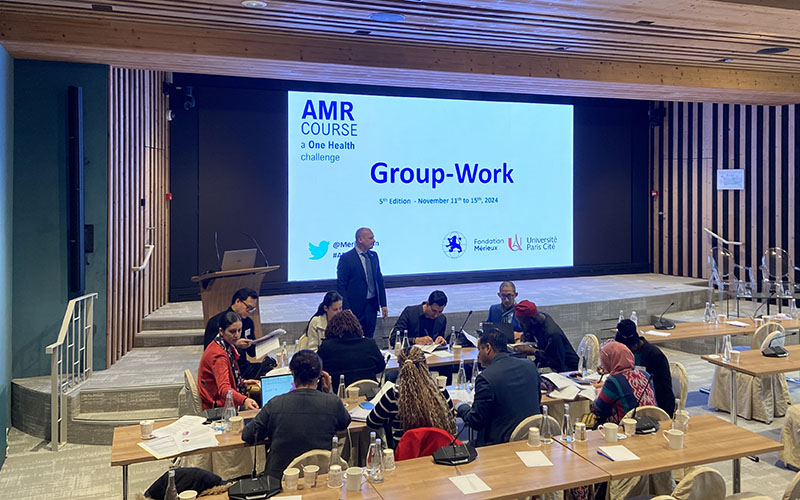
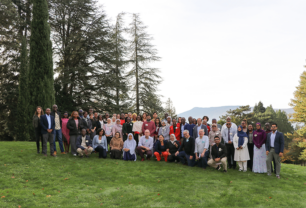
The course brings together around 40 participants from various backgrounds (human health, animal health, and the environment) for five days. The structured program is based on the five objectives of the WHO’s global action plan: awareness, knowledge, surveillance, optimized use of medication, and health policy.
The sessions are delivered by over 30 international experts through lectures, group work, discussions, and interactive workshops, promoting exchange between peers and the construction of solutions tailored to local contexts.
Alongside the teaching, the course enables participants to join an international community committed to the fight against AMR.