
The Foundation
The Mérieux Foundation is in line with the Mérieux family’s commitment to biology and the Pasteurian tradition. For nearly sixty years, it has developed an exceptional international network of scientists, researchers, donors, and public health experts who unite to fight infectious diseases on the ground.
The story begins in 1897 when Marcel Mérieux, a former student of Louis Pasteur, produced an anti-streptococcal serum to combat puerperal fever, which was devastating maternity wards, followed by tuberculin for tuberculosis diagnosis. This marked the birth of the Mérieux Biological Institute. His son, Dr. Charles Mérieux, took over in 1937 and ushered vaccinology and virology into the industrial era.
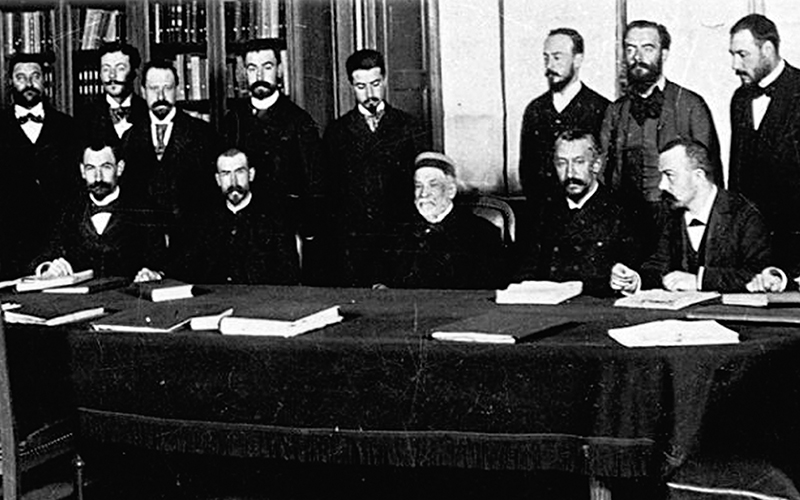
Like his father, Charles Mérieux was a humanist and a tireless researcher. He believed that access to healthcare is a fundamental human right, as stated in the 1946 Constitution of the World Health Organization. Healthcare access should not be limited by geographical or disciplinary boundaries.
Charles Mérieux founded the Mérieux Foundation in 1967 with this vision. The Foundation’s mission to continue fighting infectious diseases was guided by a Pasteurian ideal: making healthcare accessible to all through collective and collaborative work, and exchanges between experts and sectors. This pioneering and innovative culture, dedicated to international solidarity, has guided the Foundation from its inception to the present day. Since 2003, the Foundation’s activities have expanded directly into low- and middle-income countries where healthcare systems are the most fragile.
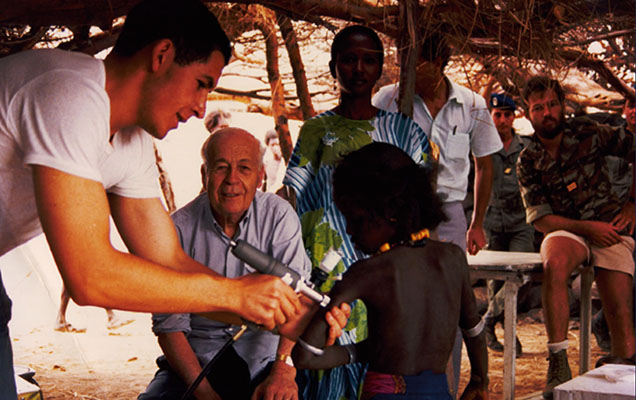
The Foundation’s mission is clear: to combat infectious diseases among vulnerable populations by strengthening local capacities in resource-limited countries.
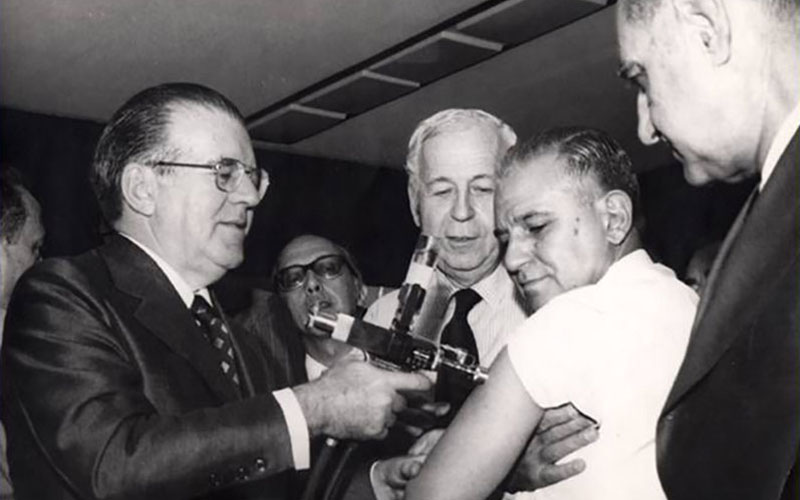
In 1974, the Foundation led a massive vaccination campaign against meningitis in Brazil. Within five days, the 10 million inhabitants of São Paulo were vaccinated. In just one hundred days, 100 million people received treatment. Two years later, the Foundation’s efforts led to its official recognition as a public-interest organization.
The Foundation continued its mission, intensifying its activities. In 1986, it launched the Cent Gardes Conference at Les Pensières Center for Global Health, with a focus on HIV. Scientists from public and private research institutions, hospitals, universities, and health authorities from numerous countries met there every two years. This marked the beginning of a knowledge-sharing dynamic that kept growing, bringing together experts to address key public health issues across geographical and sectoral boundaries.
In the 2000s, Alain Mérieux, son of Charles Mérieux, took the helm of the Foundation. Two years later, in 2005, the Foundation’s international expertise expanded. Local offices were opened in our countries of intervention, and new cutting-edge infrastructures were built under the Foundation’s supervision: the Rodolphe Mérieux Laboratories. Transferred to local stakeholders, these facilities stepped up local teams’ equipment and expertise, becoming strong allies in implementing the Foundation’s projects.
Since then, the Foundation’s permanent field teams have grown steadily, and partnerships with local health and civil society stakeholders have multiplied with a single goal: to fight infectious diseases in low- and middle-income countries.