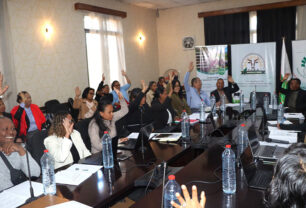
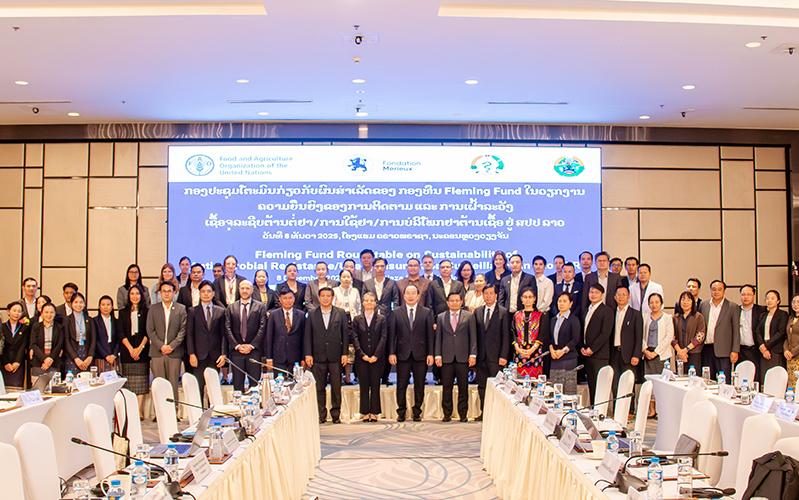
Organized in the closing stages of the Fleming Fund program in Laos, scheduled to end in March 2026, this round table aimed to take stock of the program’s achievements and initiate collective reflection on the conditions necessary for the sustainability of antimicrobial resistance (AMR), use (AMU), and consumption (AMC) surveillance systems. Another goal was to identify common priorities and concrete ways of ensuring the work could continue once the Fleming Fund grant comes to an end.
The meeting consisted of institutional presentations highlighting the Fleming Fund’s main results in human and animal health, followed by discussion sessions in sector-specific groups. These exchanges enabled participants to analyze the program’s achievements, identify the remaining challenges, and discuss possible options for governance, coordination, and funding. A collective reporting session then provided an opportunity to share the conclusions and suggest common outlines for the future.
Discussions focused on the sustainability of surveillance networks, the maintenance of laboratory capacity, the production and use of AMR/AMU/AMC data for developing public policies, and mechanisms for coordination between sectors. The priorities of long-term funding, strengthening national governance, and integrating AMR surveillance into public health strategies were also widely discussed.
This round table was a key opportunity for consultation between national players and Fleming Fund partners, resulting in the emergence of a shared vision of the priorities to be maintained and the levers to be activated to ensure the systems put in place are sustainable. The discussions underlined the importance of gradual adoption of the mechanisms by national institutions and a coordinated commitment to continuing the efforts made to combat antimicrobial resistance.
The Fleming Fund has been supporting Laos in strengthening its antimicrobial resistance surveillance systems since 2019, through a One Health approach. The program has helped to develop laboratory capacity, extend surveillance networks, improve the quality of the data produced, and strengthen the skills of the professionals involved, in both human health and animal health.
About the Fleming Fund
The Fleming Fund is an international program funded by the British government that aims to strengthen the surveillance of antimicrobial resistance in countries with limited resources. It is being implemented in Laos in collaboration with national authorities and several partners, including the Mérieux Foundation, FAO, and the Lao-Oxford-Mahosot-Wellcome Trust Research Unit (LOMWRU), in order to support the development of sustainable, integrated surveillance systems.