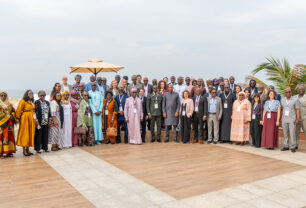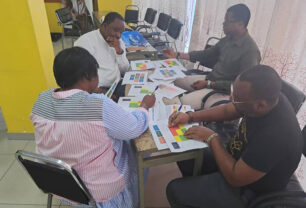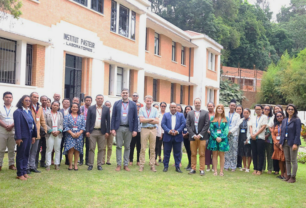
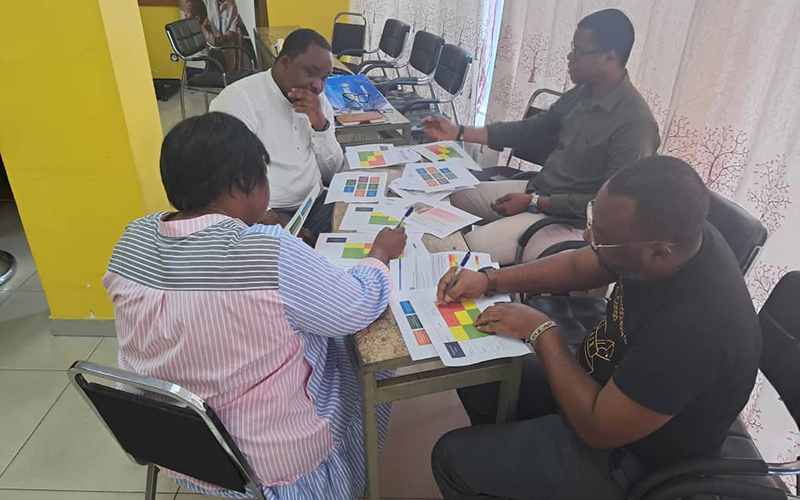
Held in Kinshasa from February 16th to 20th 2026, and involving 13 participants from INRB Kinshasa, INRB Goma, the University of Kinshasa, and the Catholic University of Bukavu, the five-day workshop combined technical training, hands-on risk assessment, and structured pedagogical sessions. The first three days focused on biosecurity fundamentals, including risk assessment, emergency management, physical security, personnel reliability, and cybersecurity. Through practical scenarios grounded in the Congolese laboratory context, participants strengthened their ability to analyze risks, identify gaps, and propose adapted mitigation measures.
The final two days marked a transition from learners to national trainers. Participants received structured guidance on adult learning methods, course preparation, and the use of standardized pedagogical tools. Group work, teaching simulations, and peer feedback helped consolidate these skills. By the end of the training, the first national nucleus of biosecurity trainers emerged—an essential step in enabling laboratories across the country to autonomously replicate and sustain training efforts.
The mission also benefited from the meaningful engagement of national health authorities. The visits of the Director General of INRB, Prof J.J Muyembe, and the Director of the Ministry of Health’s Directorate for Health Laboratories, Justin Kinziangu Mawina, reinforced the institutional relevance of the initiative. Their presence highlighted the alignment between CEPI supported activities and national priorities, particularly with regards to risk assessment, emergency preparedness, and the management of sensitive biological materials.
Participants demonstrated measurable progress: all improved their knowledge scores between the pre-test (minimum 39%and maximum 78%) and post-test (minimum 60% and maximum 98%)with several reaching above 90%. The satisfaction survey reflected exceptionally high appreciation for the training content, relevance, interactivity, and the expertise of trainers. Participants emphasized the urgency of strengthening biosecurity in the DRC and expressed enthusiasm for applying newly acquired skills in their institutions.
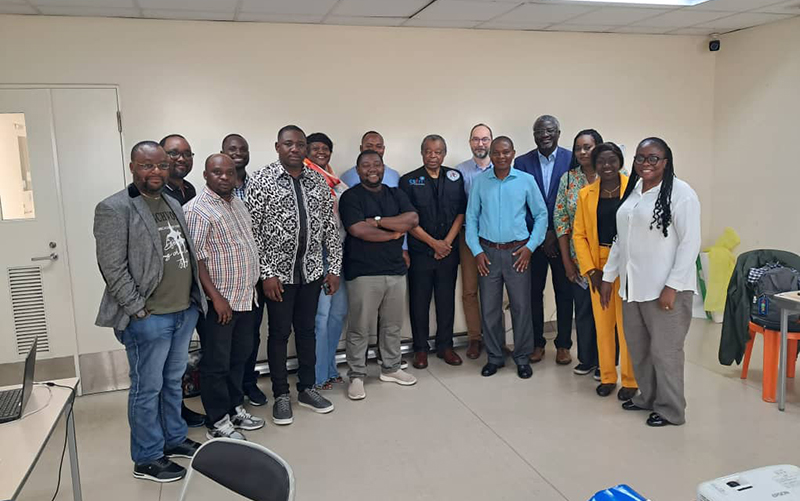
Beyond technical and pedagogical outcomes, the workshop fostered meaningful connections between laboratories, creating the foundations for a national community of practice in biosecurity. This emerging network—strengthened by future onsite coaching and continuous exchanges—will support harmonized procedures, peer learning, and improved coordination between laboratory teams and national authorities.
The mission has therefore achieved more than skill building: it has initiated national momentum. By equipping frontline laboratory personnel with both technical and training capacities, and by reinforcing collaboration with the Ministry of Health, CEPI and the Mérieux Foundation are contributing to a sustainable system where biosecurity becomes a shared responsibility, embedded in daily practice and supported by an active community working toward the same goal: safer laboratories for a safer DRC.