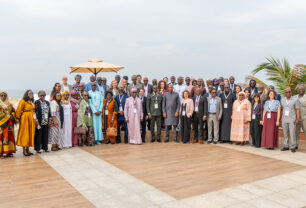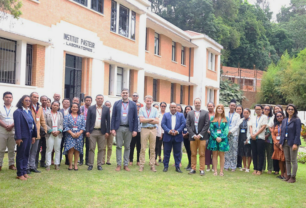
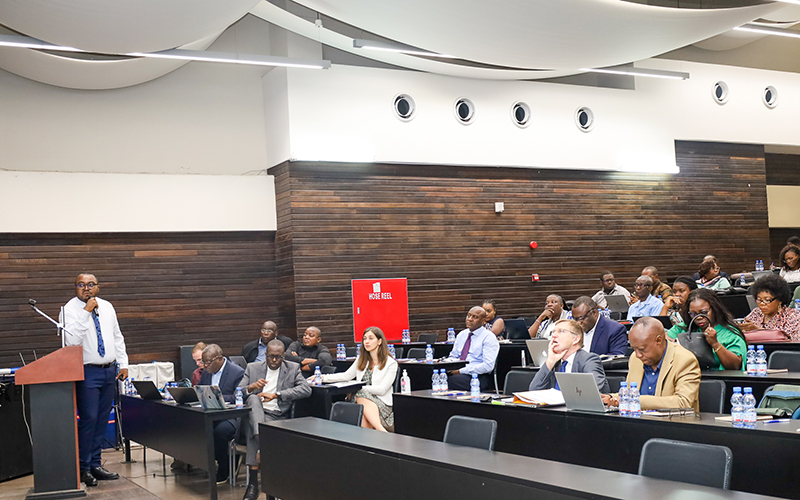
This important event brought together the project’s stakeholders, including representatives of the Ministry of Public Health, Hygiene and Social Security, the Mérieux Foundation, INRB Kinshasa, and the AFD. Chaired by Dr. Jean Bertin Epumba, Secretary General for Public Health, Hygiene and Social Security, the meeting aimed to take stock of the project’s progress and define the strategic priorities for 2026.
The event was officially opened with a speech by Dr. Jean Bertin Epumba and Professor Stomy Karhemerhe, Deputy Director of INRB Kinshasa, Dr. Epumba emphasized: “Our country is a subcontinent and we need a strong network of laboratories linked to the INRB to enable disease-related alerts to be detected in under 72 hours. A network like this will allow us to report and respond quickly, and to put robust resilience mechanisms in place. The INRB support project is working to achieve this.” Following a presentation of the project’s progress, the delegates reviewed the project’s three main objectives:
- Optimize the organization of the INRB
- Strengthen the INRB’s technological capacity and revitalize its role in providing technical support to hospitals in the fight against antimicrobial resistance and malaria
- Strengthen practical hospital training
Over the course of the day, the delegates restated their commitment to strengthening the INRB’s capacity, including in its role as the national reference laboratory for public health in the Democratic Republic of the Congo.
“The Mérieux Foundation is proud to have been chosen as an implementation partner to support the INRB in achieving the objectives set out in this project. As a governance body, this Annual Steering Committee allows us to assess the activities carried out and set the course for the following year,” said Chloé Masetti, the Mérieux Foundation project manager.
Hervé Conan, the French Development Agency’s director in the Democratic Republic of the Congo, reminded the committee: “This project is part of our vision for a long-term partnership based on trust, respect for national priorities, and the search for lasting impact on behalf of the people. It aims to help strengthen the resilience of the health system by improving equitable access to high-quality health services, capable of responding to current and future health challenges, for the people of Kinshasa province.”
The project can now continue into its second year. Priorities will include strengthening the quality management system and waste management at the INRB, reinforcing the technical facilities for bacteriology and for the diagnosis of malaria at the INRB and at beneficiary sites, and continuing training for medical personnel. Further project activities in 2026 will include two scientific studies to be launched on the proper use of antibiotics in hospitals and antimicrobial resistance, and on the evaluation of the MalarIA AI software for remote supervision and quality control of the microscopic diagnosis of malaria.
About the project
This support project for the National Biomedical Research Institute in Kinshasa emerged from bilateral collaboration between the Democratic Republic of the Congo and France. The French Development Agency selected the Mérieux Foundation to manage the initiative. The project was officially launched in January 2025.
The main purpose of the initiative is to strengthen the INRB’s organizational and technical capabilities in its role as a national public health laboratory and to reduce gender inequality.