Improving access to diagnostics
In Bangladesh, the Mérieux Foundation is working alongside local institutions to expand access to biological diagnostics for the long term.
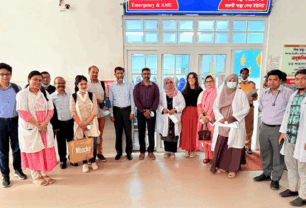
We have been actively contributing since 2015 to the development of BITID (Bangladesh Institute of Tropical and Infectious Diseases), which hosts the Rodolphe Mérieux Laboratory, a member of the GABRIEL Network. Located in Chittagong, it provides the local population with high-quality diagnostics (routine tests and specialist examinations) and trains students in clinical biology and infectious diseases, strengthening local capacity in the country.
We are also helping the health authorities to set up a robust, country-wide laboratory system, which is essential for improving access to diagnostics, surveillance data collection, and thus the health of the population over the long term. This technical assistance includes supporting the finalization of a national strategy for public health laboratories for infectious diseases, strengthening the surveillance of climate-sensitive infectious diseases, building national capacity in sequencing and bioinformatics to monitor locally prioritized pathogens, and supporting laboratories such as the National Institute of Laboratory Medicine and Referral Center (NILMRC) and the Institute of Epidemiology, Disease Control and Research (IEDCR) in implementing their quality management systems.
Advancing public health
Tuberculosis
According to the Global Fund, Bangladesh is one of the countries most affected by tuberculosis in the world, while the effects of climate change are threatening the progress the country has made in overcoming the disease.
The Mérieux Foundation develops research projects that aim to improve the screening and management of tuberculosis patients, with support from civil society organizations and research institutions, including three that are part of the GABRIEL network.
These projects prioritize diagnostic innovation and support for community intervention schemes with an impact on tuberculosis prevention and treatment, particularly for pulmonary tuberculosis in children.
Respiratory infections
In partnership with several local institutions, the Mérieux Foundation contributes to the development of projects targeting respiratory infections, with an approach that combines clinical research with skills development and improvements to diagnostic tools.
In particular, we support research to improve care for the Rohingya population, refugees living in camps who are particularly vulnerable and exposed to acute respiratory illnesses. These studies also make it possible to formulate appropriate preventive recommendations, analyze the use of antimicrobials in communities, and improve the training of healthcare professionals at the patient’s bedside.
Support for global health
As a densely populated, low-income country that is particularly vulnerable to weather events, Bangladesh suffers from major public health deficits.
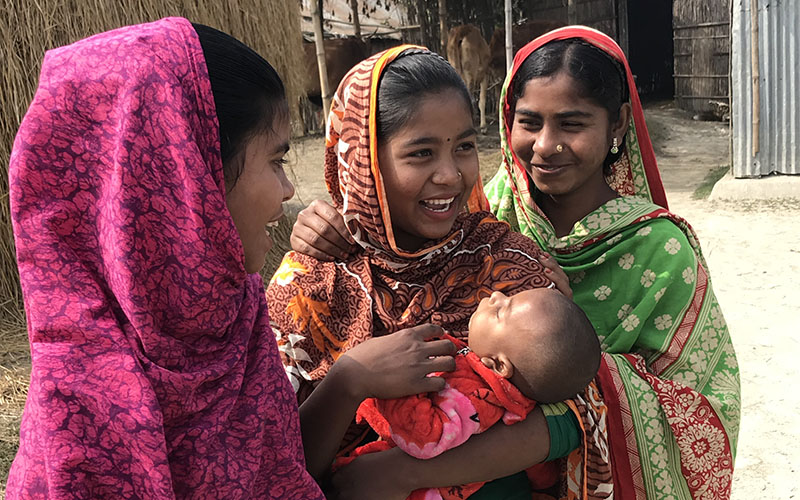
As well as strengthening the country’s diagnostic capacity, we provided support from an early stage for the implementation of actions to improve the living conditions of the most vulnerable populations. This is particularly the case on the island of Moheshkhali and in the Rohingya refugee camps, where we maintain close links with local partner associations.