Context
Haiti was one of the first countries where we established a presence. The country faces many challenges to its healthcare system and the situation has been worsened by frequent natural disasters, epidemics, years of political instability, and now escalating violence.
Improving diagnostics and surveillance
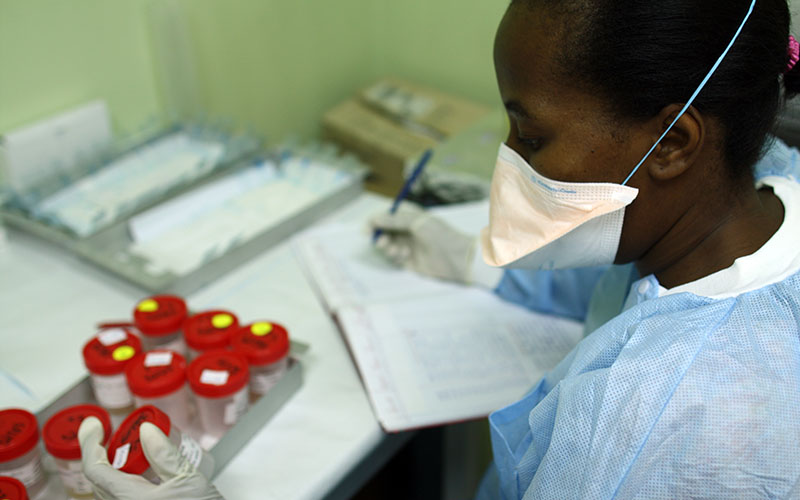
The Mérieux Foundation is helping Haiti to strengthen its national laboratory system, particularly through a long-standing partnership with GHESKIO. The Rodolphe Mérieux Laboratory in Port-au-Prince, the country’s only P3 laboratory, plays a central role in the fight against infectious diseases. It is equipped to provide molecular diagnostics for pathogens such as HIV, cholera, and Zika virus, and more recently SARS-CoV-2.
Despite the difficulties on the ground, we have set up activities aiming to strengthen the Haitian medical biology system for the long term. Our work combines a decentralized approach, through support for peripheral laboratories, with a more centralized focus, improving the energy performance of GHESKIO Centers. It follows on from the SPHaïtiLAB program, which developed the country’s first national policy on laboratories and health research while providing training and supervision for professionals throughout the country.
Training is also the foundation of our work in Haiti. We have been helping to strengthen the skills of laboratory technicians since 2011, creating a training program that is now part of the bachelor’s degree course in medical biology at the State University of Haiti, constituting the fourth year of professional training.
Support for global health
The Mérieux Foundation works in Haiti to improve living conditions for vulnerable populations, particularly women and children. As part of a global health approach, these initiatives aim to cover their basic needs in order to contribute to improving their health.
In Haiti, we provide direct support to local voluntary organizations, which have now become long-standing partners. For example, we help to set up income-generating activities to enable people living with HIV to break out of their isolation. We also work to improve living conditions and access to drinking water, food, healthcare, and education for disadvantaged children.