Context
To prevent or respond appropriately to new epidemic phenomena and other public health emergencies, the World Bank supports the Regional Disease Surveillance Systems Enhancement (REDISSE) program in West Africa. The program aims to reinforce regional and national surveillance and response systems. Officially launched in 2016, it groups together a set of multisectoral projects that initially targeted the countries of the Economic Community of West African States (ECOWAS) and Mauritania. The fourth funding round began in 2020, extending into Central Africa.
In Central Africa, the program has a regional dimension – grouping together Angola, the Central African Republic, the Democratic Republic of the Congo, the Republic of the Congo, and Chad under the management of the Economic Community of Central African States (ECCAS) – and a national dimension in each country.
The regional dimension of the program in Central Africa aims to strengthen laboratory networks with an integrated approach to health (human, animal and environmental).
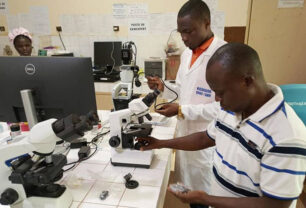
Developing laboratory systems is a means of expanding the role of laboratories beyond their primary role of establishing diagnoses in order to treat patients. For example, laboratories can take on various functions such as detecting and responding to epidemics, collecting and reporting data, and the cross-border surveillance of diseases and antimicrobial resistance as part of a One Health approach.
Thanks to its experience, the Mérieux Foundation was commissioned by the regional program coordinated by ECCAS to contribute its expertise in strengthening laboratory-based surveillance.