
The Foundation
The Mérieux Foundation was created in 1967 and recognized as a public-interest organization nine years later. It operates independently for public health. It always prioritizes a One Health approach that encompasses human and animal health and thus contributes to international efforts to achieve the United Nations Sustainable Development Goals (SDGs).
For over 50 years, the Mérieux Foundation has been committed to global health. It specializes in the fight against infectious diseases and was recognized as a public-interest organization in 1976, nine years into its existence. It supports projects in more than 25 low- and middle-income countries, with a focus on the most vulnerable populations.
The Mérieux Foundation’s teams are present in France and 15 other countries. Thanks to this strong local presence, the foundation operates directly in Africa, Asia, the Middle East, and the Indian Ocean. Solid partnerships with local stakeholders enable it to tailor its programs and actions to the specific realities of each region and the needs of populations.
The Foundation also relies on a network of partner laboratories established in the most exposed regions. These centers of excellence are equipped with the necessary expertise and equipment to strengthen local healthcare capacities. They actively contribute to improving diagnostics to better prevent and treat infectious diseases while facilitating knowledge-sharing and training for local healthcare professionals.
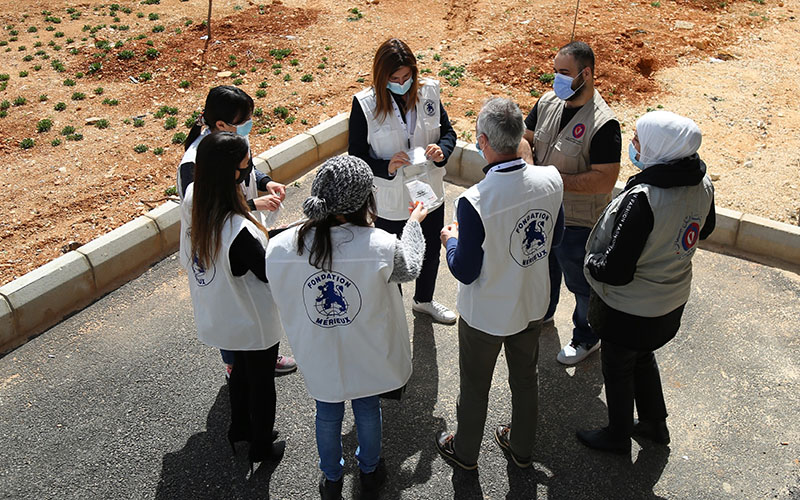
The Foundation receives both public and private funding to implement or support health projects, yet its operations remain independent. The projects it supports mainly focus on strengthening local capacities in clinical biology to enhance access to diagnostics, epidemic surveillance, and outbreak control.
Since pathogens know no borders, the Foundation adopts a One Health approach that integrates human health, animal health, and environmental challenges. Its projects contribute to achieving several SDGs, including SDG 3 “Good Health and Well-being”, SDG 4 “Quality Education”, and SDG 17 “Partnerships for the Goals”. Within these objectives, multiple targets align with the Foundation’s mission, such as Target 3.3, which aims to end the global tuberculosis epidemic by 2030.
Adopted in 2015, the United Nations’ 2030 Agenda consists of 17 Sustainable Development Goals (SDGs) to be achieved by all member states by 2030. Each goal is broken down into specific targets. The SDGs address global challenges faced by all countries, including poverty, inequality, climate change, environmental degradation, prosperity, peace, and justice. As interconnected objectives, they require cross-sectoral and coordinated responses.
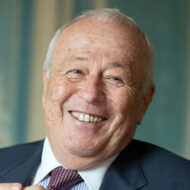
“Because new pathogens are emerging, others are reappearing, mutating, and adapting, and because conflicts and climate change are creating movements and concentrations of particularly vulnerable populations, the threat of infection and its epidemic risks have never been so present. Countries with limited resources are the main victims. Children and women, on the front lines, are paying the highest price.”
Alain Mérieux
President of the Mérieux Foundation