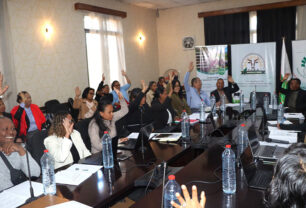
At a time when the diagnostic sector in West Africa was suffering from underinvestment and a lack of recognized strategic frameworks, the West African Network of Biomedical Analysis Laboratories, RESAOLAB, was created jointly in 2009 by the Mérieux Foundation and its regional partners in response to the 2008 Maputo Declaration on strengthening laboratories. This pioneering initiative in the subregion aimed to respond to a critical need for greater structure in laboratory systems. The network was built around the principle of regional collaboration, with the aim of improving the operation of laboratory services and population health, including strengthening disease prevention and integrated, early diagnosis of infectious and non-infectious diseases.
RESAOLAB brings together the national laboratory departments (LDs) within the health ministries of its member countries. It promotes a shared vision of the role and mandate of the LDs as institutional entities responsible for defining the national strategy for the sector, structuring the laboratory system and coordinating resources and support to make it stronger.
The network has developed and mobilized over the last 15 years to make high-quality biomedical laboratory services accessible to populations, with a focus on four values: professionalism, commitment, sharing, and solidarity. This approach was structured over three stages:
- Phase 1 (2009–2012): Launch of the first program dedicated to laboratories in West Africa, covering Burkina Faso, Mali, and Senegal
- Phase 2 (2013–2017): Expansion of the network and a regional vision to harmonize practices with the integration of Benin, Guinea, Niger, and Togo
- Phase 3 (2019–2025): Support for the implementation of strategies to develop laboratory systems and steps to ensure the long-term future of the network.
Thanks to longstanding support from the French Development Agency (AFD) and other partners (the Monaco Department of International Cooperation, the Islamic Development Bank, and the Stavros Niarchos Foundation), RESAOLAB has worked to structure and develop the laboratory systems in the member countries around four pillars, with results that underline its impact:
- Governance: Seven laboratory departments working as a network, developing policies and strategic plans
- Training: Grants for initial and continuing training, with subjects ranging from technical issues to leadership, including both theory and practice: 30 laboratory technicians trained in maintenance, 64 grants for DES diplomas in medical biology, and 28 grants for the leadership course
- Quality: Development of two regional External Quality Assessment (EQA) programs in biochemistry and hematology, and support for member countries in preparing and implementing national EQA programs
- Surveillance: Development and deployment of the LabBook software, which is interoperable with the data reporting systems used nationally (DHIS2) and internationally (Global Antimicrobial Resistance and Use Surveillance System – GLASS), and the use of DHIS2 by LDs to supervise laboratory systems
The major impact of the network’s activities lies in the creation of visible, recognized LDs to structure and strengthen laboratory system governance. This achievement owes its success to several key factors identified during several evaluations. These include the long-lasting partnership between the Mérieux Foundation (technical expertise) and the AFD (financial support). It is based on sharing between peers, a bottom-up approach designed to respond to real needs on the ground, and a network dynamic stimulating healthy competition between member countries.
As Professor Becaye Fall pointed out at the last steering committee meeting, the completion of this third phase does not mean an end to the network’s activities. RESAOLAB’s success is based on a model in which the local players now have everything they need to manage their own strategies.
The goal now is to secure long-term continuation at two levels:
- Nationally: By ensuring consistency between funding bodies and putting the lessons learned into practice
- Across the network: By ensuring the long-term sustainability of the network through the creation of an association to coordinate future phases of the project and support the network’s activities