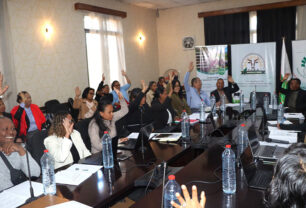
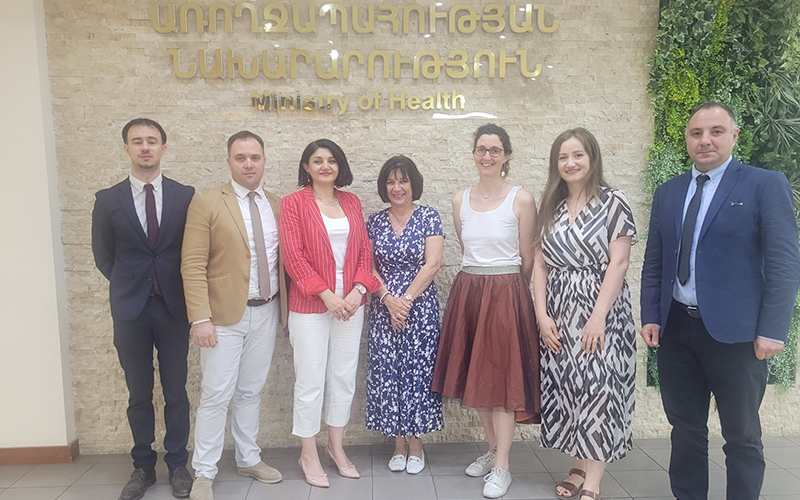
During the mission to Yerevan, the project delegation, consisting of a representative of the Mérieux Foundation, an infectious disease specialist, and a bacteriologist from the Hospices Civils de Lyon, met officials from the National Center for Disease Control (NCDC).
This meeting was an opportunity to take stock of the progress made and discuss the prospects for ensuring the project’s achievements have a lasting impact. The results of the assessment conducted using the Laboratory Maturity Model (LMM), a tool to support the continuous improvement of laboratory systems, were presented. Discussions also focused on the ongoing modernization of the national laboratory network, with the gradual implementation of an interconnected laboratory information system (LIS). This development will allow clinicians to access laboratory test results directly.
The progress observed at the pilot site, the Yeghegnadzor laboratory, demonstrates the project’s direct impact on patient care:
- Group B Streptococcus (GBS) screening: As a major cause of perinatal mortality, GBS constituted one of the project’s strategic priorities. A total of 200 screenings were conducted during the period, compared with only 131 in 2025. The detection rate rose from 0% to 11%, bringing it into line with international standards and demonstrating a significant improvement in the laboratory’s technical quality.
- Diagnosis of urinary tract infections: This activity grew significantly. The number of tests carried out in just four months in 2026 matched the total for the whole of 2025, reflecting increased confidence in microbiological analyses among doctors as a basis for antibiotic prescriptions.
- Clinical practices and training: The project also helped to strengthen collaboration between clinicians and microbiologists, promoting more rational use of antibiotics and better patient care.
This success was welcomed by Dr. Lena Nanushyan, Armenia’s Deputy Health Minister, who highlighted the project’s contribution to reducing perinatal morbidity and mortality through improved GBS screening.
As well as activities in the field, the CAP4AMR project enabled a thorough assessment of the Armenian national laboratory system. With an overall maturity score of 57%, the analysis highlights robust strengths in the areas of governance, human resources, and biosafety.
The following priority areas have been identified to build on this momentum: strengthening national coordination, formalizing the laboratory network, creating a national list of essential diagnostic tests, and improving data management.
Given the project’s positive results, the Armenian health authorities and their partners expressed a desire to continue this cooperation. Discussions about the next phase of the program are focusing on a “One Health” approach, incorporating the monitoring of antimicrobial resistance in the environment, particularly in water, and the sharing of data with international networks such as the WHO’s GLASS system.
Conversations are currently being initiated with donors to identify the funding needed to implement these new steps, and continue the effort to combat antimicrobial resistance in Armenia.